Bogotá has a strange relationship with its mountains. You see them every day when you leave home, green and vertical to the east, but most people never set foot on them. And yet walking the Cerros Orientales at night or before dawn is one of the strangest and most rewarding experiences this city offers: going from the congestion of Séptima to absolute silence in a matter of twenty minutes, watching the blanket of lights stretch as far as the eye can see, and hearing only the wind among the eucalyptus trees.
There's a science to it. The cerros are not just any park: they have been a Protected Forest Reserve since 1977, with controlled-access trails, strict schedules, and areas where you shouldn't venture without knowing them. This guide is for those who want to do it right: safely, with respect for the ecosystem, and with the correct information.
📌 Transparency
This article contains sponsored/affiliate links. We may receive a small commission at no extra cost to you.
Spanish Bootcamp Online
The Cerros Orientales: what they are and why hike them at night
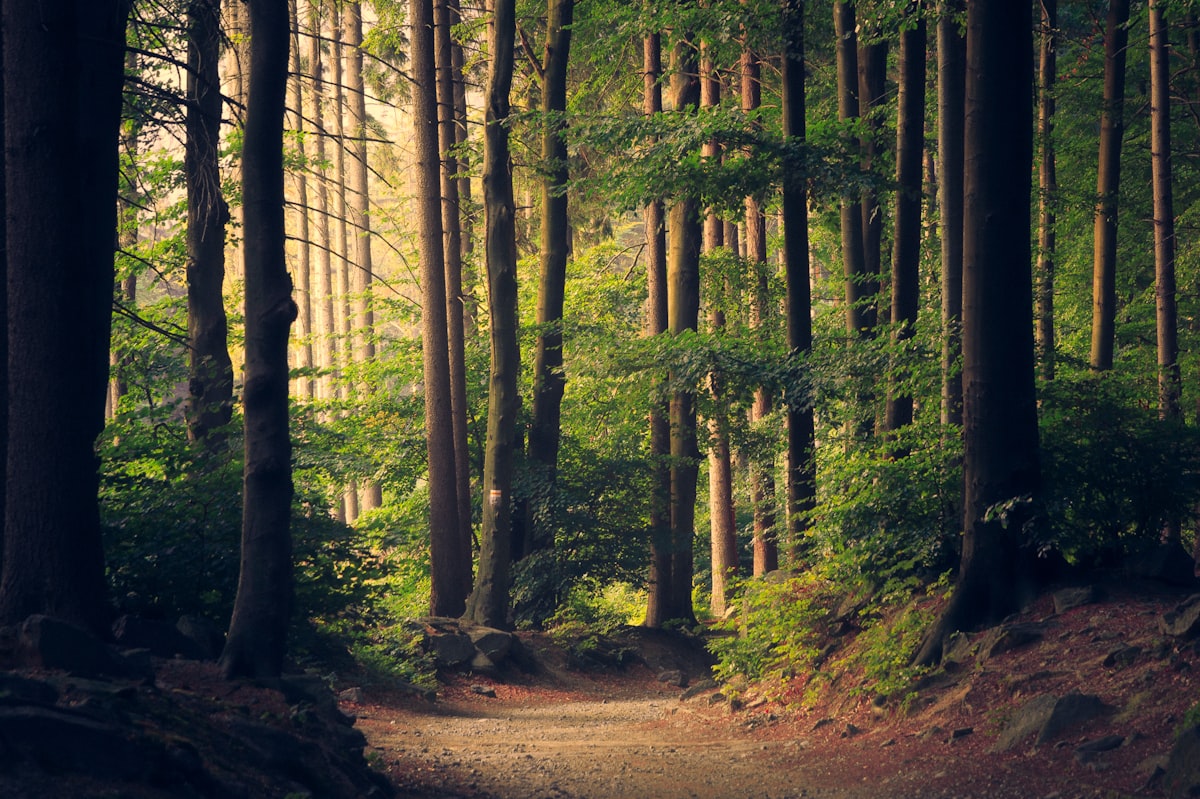
The Cerros Orientales are the mountain range that crosses Bogotá from south to north along its eastern edge. In total they cover about 13,142 hectares of forest reserve, with elevations ranging from 2,650 meters to 3,600 meters above sea level. They are not an urban park like Simón Bolívar: they are real mountains, with streams, high Andean forest, páramo, and a network of historic trails that have been there for centuries.
Those trails are not new. Many were pre-Columbian routes that connected the savanna with the municipalities of La Calera, Choachí, and Guasca, and were later used by farmers to come down and sell their products in Bogotá. The Cruz de Guadalupe, that icon visible from any point in the city, was installed in 1928 on the initiative of the priest Jesús Emilio Ramírez and became a pilgrimage site. Today the same trails are preserved for passive recreation, mostly managed by the Empresa de Acueducto y Alcantarillado de Bogotá (EAAB), which maintains them because the streams of the cerros feed the Tunjuelo, Fucha, Salitre, Torca, and Teusacá basins.
And why at night? Because the city from above changes completely. By day you see the chaos, the pollution, the traffic. At night — or better, in the hour before dawn — you see a carpet of orange and white lights stretching across the entire valley, with the silhouette of Monserrate outlined in the background. It's a perspective very few bogotanos know, even those who have lived here their whole lives.
A little-known fact: the cerros have their own nocturnal wildlife. It's common to hear curíes (those Andean rodents the size of a large rabbit), birds like the chamicero, and even see opossums if you go quietly. The eucalyptus trees that dominate much of the landscape are not native — they were planted in the 20th century to reforest eroded areas — but today they are part of the ecosystem and serve as shelter for several species.
Key routes for night and sunrise hikes
Not all trails allow night access. In fact, most close at sunset. The ones that do work for pre-dawn hikes are three, and each has its own character.
Quebrada La Vieja Trail
It's the most popular and the most organized. You enter at Calle 71 with Carrera 1, in the El Chicó neighborhood, and climb along the Quebrada La Vieja to a viewpoint with a full view of northern Bogotá. The complete route is about 4 kilometers of moderate ascent, with a constant but manageable slope.
The critical detail: access requires a prior reservation. The EAAB runs an online registration system with limited spots per time slot, and tickets sell out quickly, especially on weekends. The pre-dawn slots — which start before 6:00 AM — are the most requested because they let you reach the viewpoint right at sunrise. It's recommended to book several days in advance and verify current schedules directly through the EAAB's channels, because they change depending on the season and weather conditions.
The trail is well marked, has handrails on the steepest sections, and has security personnel at the checkpoints. It's the most recommended option for first-timers.
Sendero del Chicó (entrance on Calle 94)
Less crowded than La Vieja, this trail starts at Calle 94 with Carrera 1, near the boundary between Chicó and Rosales. The climb is more demanding: there are sections of natural stairs and steep slopes that in the dark require a good flashlight and care with roots and loose stones.
The reward is a less crowded viewpoint with a privileged view toward the center and the south of the city. From there you can clearly see the Colpatria tower, the Centro Internacional, and, on clear nights, the full silhouette of Monserrate with its illuminated basilica.
This trail also operates with access control and defined schedules. It's not open freely 24 hours, so you need to check before going up. The advantage is that since it's less known, there's a better chance of having the path almost to yourself.
Path to the Cruz de Guadalupe (from Calle 70)
This is the classic. The ascent to the Cruz de Guadalupe — located at 3,152 meters above sea level — is Bogotá's most iconic hike, but most people do it during the day and on weekends, when it looks like a parade. Before dawn it's another thing entirely.
The traditional route starts at Calle 70 with Carrera 1, in the El Rosario neighborhood, and climbs along a cobblestone path that is quite steep in some sections. It's approximately 4.5 kilometers to the cross, with an elevation gain of about 500 meters. The average ascent time is 1.5 to 2 hours, depending on your pace.
Watch out for this: the path to Guadalupe is not always open to the public. It has had temporary closures due to security and maintenance issues, and in some periods access is only allowed accompanied by authorized guides or in organized groups. Before planning a pre-dawn outing, confirm the trail's status with the Tourism Police or with the local hiking groups that operate in the area.
If you manage to go up before dawn, the view from the base of the cross is simply the best that exists of Bogotá. The entire city unfolds below, from Usaquén to Ciudad Bolívar, and if the sky is clear you can see the savanna all the way to the hills behind.
Essential gear and golden rules
This is not a walk in the park. The cerros have microclimates, and the temperature at 5 in the morning in the mountains can be between 4 and 8 degrees Celsius, with wind and humidity. The difference between an incredible experience and a miserable one is almost always in the gear.
What to bring, no exceptions
- Headlamp (not your phone's). You need your hands free to grab handrails and branches. A headlamp with at least 200 lumens and spare batteries.
- Layers of clothing: a thermal base layer, a fleece or down mid-layer, and a waterproof windbreaker. In the cerros it can be raining up top and clear below.
- Mountain footwear with good grip. Running shoes don't work for mud or loose stone.
- Water: at least one liter per person. There are no supply points on the trails.
- Snacks: nuts, bars, fruit. Something with sugar for the descent.
- Charged phone with an external battery. Signal is intermittent on several sections.
- Basic first-aid kit: band-aids, elastic bandage, painkillers.
- ID document. They may ask for it at checkpoints.
The rules that are non-negotiable
- Never go alone. Minimum three people. It's not just about safety from others: if someone gets injured, you need someone to stay and someone to go down for help.
- Respect the schedules. The trails have defined access slots. If it says it closes at 5 PM, don't stay until 6. The park rangers are not going to come looking for you at night.
- Tell someone. Tell a trusted person what route you're doing, what time you're entering, and what time you plan to leave. If you don't arrive, that person knows who to call.
- Don't leave the marked trails. The reserve has natural regeneration zones and restricted areas. Going off-trail is not only illegal: it's dangerous. There are ravines and erosion zones that you can't see in the dark.
- Don't leave trash. Not even organic. A banana peel takes months to decompose in the cold Andean climate.
- No campfires or cigarettes. The cerros are vulnerable to forest fires, especially in the dry season (December to March). A single poorly extinguished cigarette can burn hectares.
- If you go with a pet, check first. Some trails allow dogs on leash; others # Native wildlife — curíes, birds, opossums — gets stressed by introduced predators.
About schedules: dawn or sunset?
Both options work, but they are different experiences.
Pre-dawn outings (between 4:30 and 5:30 AM): it's the most recommended option to see the sunrise from above. You start with a headlamp, climb in the dark, and reach the viewpoint just as it begins to get light. The city lights up slowly and the sky goes from black to deep blue to orange. It's the experience most people are looking for. The downside: you have to get up really early and the pre-dawn access slots sell out first.
Afternoon hikes: you start around 3 or 4 PM and come down before full darkness. You see the sunset from the upper part and then descend with the last light. It's more relaxed and less physically demanding because you're not carrying the weight of sleep. The rule is simple: you're down before it gets completely dark. No exceptions.
What rem