

The starting point: La Cuesta del Viento and the access from El Salvador
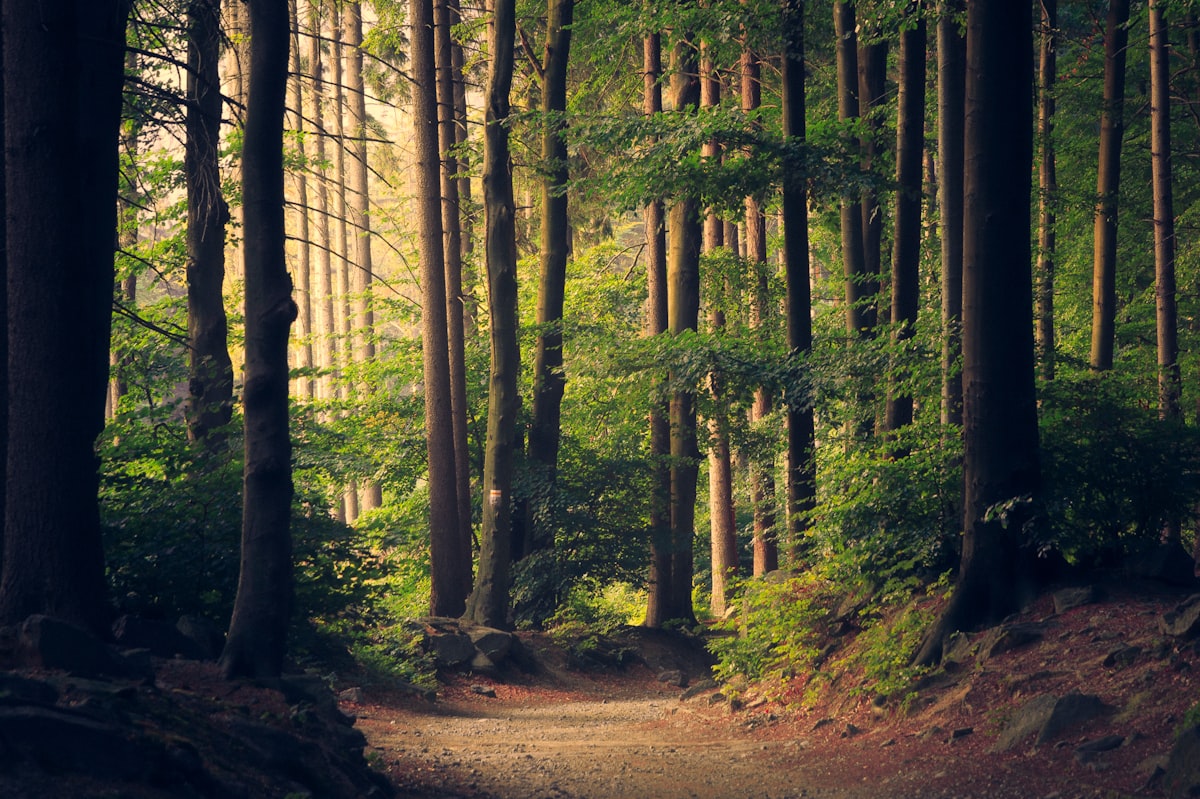
Most tourists arrive at Cerro de las Tres Cruces through the main entrance, the one that climbs up from the Los Naranjos neighborhood and that on weekends looks like a line to ride the Metrocable. Those in the know, those who have truly learned to read the mountain, enter from another side. From the El Salvador neighborhood, in comuna 8, a trail branches off that locals know as "La Cuesta del Viento". It's not an official name; it doesn't appear on Google Maps or in printed guides. It's a name passed from mouth to mouth, as good mountain routes are.
To reach this access point, you need to take a bus that goes up to the El Salvador sector. From downtown Medellín, any bus that says "El Salvador" or "Villa Lilliam" will do. The trip takes about 30 minutes and costs around $3,000 COP. The bus drops you off at the main square of the neighborhood, where locals still sit and drink coffee on the corners. From there, walk two blocks eastward, always heading towards the mountain. You'll see a steep street that ends at a green metal gate. That's the entrance. There's no sign, no ticket booth. Just the gate and the silence of the mountain on the other side.
📌 Transparency
This article contains sponsored/affiliate links. We may receive a small commission at no extra cost to you.
Spanish Bootcamp Online
This access has a huge advantage: the slope is more gradual than the main entrance. The first 500 meters are a wide dirt track that winds between bushes and wild guava trees. In September 2026, the vegetation is especially lush because August's rains were generous. That means more cover for the birds, but also more difficulty seeing them. You have to move slowly, patiently, and above all, silently.
Unlike the main entrance, where the noise of portable speakers is constant, here the only sound is the wind moving the leaves of the yarumo trees. That's why locals call it "La Cuesta del Viento". It's not poetic; it's descriptive. The wind rises from the Aburrá Valley and hits the eastern slope of the hill with a consistency that is sometimes disconcerting. But that same wind is what brings the birds of prey, which take advantage of thermal currents to soar without expending energy.
Golden hours: when the hill awakens
If you want to see the Andean condor, you have to get up early. There's no other way to say it. The hours between 5:30 and 7:30 in the morning are sacred for birdwatchers on Cerro de las Tres Cruces. During that time, the mountain is bathed in oblique light that makes identifying silhouettes easier, and birds of prey come out to hunt with the first warmth of the day.
The Sociedad Antioqueña de Ornitología, which has monitored the area for over a decade, has documented that Andean condor sightings on this hill are most frequent between 6:00 and 6:45 in the morning. The condors seen here are not permanent residents; they come from Páramo de Belmira, about 40 kilometers to the north, looking for food and taking advantage of the air currents that form over the valley. It's a spectacle that lasts only a few minutes, when the bird crosses the sky with its outstretched wings, which can measure up to 3 meters from tip to tip.
The páramo eagle, known locally as "águila real" or "águila de la paramuna", is more elusive. Records from the Sociedad Antioqueña de Ornitología indicate it is seen most frequently between 7:00 and 8:30 in the morning, always on the higher slopes, above 2,200 meters. Unlike the condor, which glides in wide circles, the páramo eagle tends to fly in a straight line, following the edge of the mountain, searching for small mammals and birds in the bushes.
If you arrive after 8:00 in the morning, you'll probably miss the best part. It's not that there are no birds after that hour, but activity decreases noticeably. The sun heats the ground, the air becomes more turbulent, and birds of prey seek refuge in the shadows. Those who get up early, who climb with the first light, are the ones with the best stories to tell.
To maximize your chances, I recommend going up on Monday or Tuesday. On weekends, especially Sundays, the hill fills with families and exercise groups that make noise and scare away the birds. During the week, on the other hand, the hill is almost empty. You can walk for hours without crossing paths with anyone, just with the wind and the birds.
The hidden viewpoint: la Roca del Silencio
At about 2,400 meters above sea level, on the northeastern face of the hill, there is a rocky outcrop that doesn't appear on official maps. Locals call it la Roca del Silencio, and the name is no coincidence. It's a place where the wind seems to stop, where the noise of the city disappears completely, and where, if you are patient, you can see birds that you won't see anywhere else on the hill.
La Roca del Silencio is not marked with signs or flags. The only clue is a series of blue paint marks that appear every 50 meters or so, painted on rocks and tree trunks. They are discreet marks, almost imperceptible if you don't know what to look for. Local guides know them well, but independent visitors rarely notice them.
To reach la Roca del Silencio, you have to turn off the main trail at a point locals call "el cruce de las tres piedras". It's a place where three large rocks, the size of a small car, form a natural triangle. If you reach that point, look eastward. You'll see a narrow path that disappears into the vegetation. That's the route.
The path to la Roca del Silencio takes about 40 minutes from the crossroads, and it's not easy. There are sections where you have to climb over wet rocks, and others where the vegetation is so dense it barely lets in light. But the effort is worth it. The rock itself is a natural platform of about 20 square meters, with a panoramic view of the Aburrá Valley that takes your breath away. And it is, according to records from the Sociedad Antioqueña de Ornitología, the best point on the hill for observing birds of prey.
From la Roca del Silencio, observers have documented sightings of the Andean condor, páramo eagle, peregrine falcon, and even the rare swallow-tailed kite, a species that had not been recorded on the hill until 2024. The explanation is simple: the rock faces northeast, allowing you to see the birds against the dawn light, making it easier to identify flight patterns and wing markings.
It's important to clarify that la Roca del Silencio is within the hill's reserve zone, and access is restricted. The reserve administration does not allow independent visitors to reach this point without a certified guide. Those who try on their own risk receiving a fine, and more importantly, getting lost in terrain that does not forgive mistakes. Fog can descend in a matter of minutes, and without a guide who knows the blue paint marks, it's easy to become disoriented.
Minimum gear and silence rules
Cerro de las Tres Cruces is not a luxury excursion. You don't need $500,000 hiking boots or a state-of-the-art technical jacket. But you do need some basic things that make the difference between a good experience and a frustrating one.
For birdwatching, binoculars are essential. A pair of 8x42 binoculars is the gold standard for this type of activity: they offer a good balance between magnification and field of view, and they work well in low-light conditions, like those of the early morning hours. If you don't have binoculars, you can rent them at some sports stores in downtown Medellín for about $20,000 COP per day. It's not a big investment, and it will completely change your experience.
Clothing also matters, but not for fashion reasons. Birds have excellent vision, and bright colors scare them away. Locals wear camouflage clothing, or at least earth tones: dark greens, browns, grays. An olive-colored long-sleeved shirt is perfect. Plus, long-sleeved clothing protects you from mosquitoes and the scratchy vegetation found on some sections of the trail.
Footwear is another critical point. Hiking boots with good traction are essential, especially on the route to la Roca del Silencio, where there are sections of wet rock and steep slopes. Mid-ankle boots with rubber soles are sufficient. Avoid running shoes: they are slippery on rocks and don't offer ankle support.
And then there's the matter of silence. The Cerro de las Tres Cruces reserve has internal regulations that explicitly prohibit the use of portable speakers and loud music. It's not a suggestion; it's a rule. Park rangers have the authority to ask you to turn off your music and even to expel you from the reserve if you don't comply. The reason is simple: noise stresses birds and forces them to abandon their feeding and nesting areas.
Silence is not just a rule; it's a strategy. Birds of prey have excellent hearing, and the slightest crack of a branch can make them change their flight path. Experienced observers walk slowly, making as little noise as possible, and stop every few meters to listen. Because on the mountain, sound is as important as sight. The song of a blackbird, the call of a hawk, the flapping of a dove: all are clues that guide you towards sightings.
What to do: routes and observation points
Cerro de las Tres Cruces offers several hiking routes, each with its own characteristics and its own value for birdwatching. Beyond the main route and the route to la Roca del Silencio, there are other points worth knowing.
The main route, the one that climbs from Los Naranjos, is the most traveled and the easiest. It's about 2.5 kilometers of climbing with a moderate slope, which can be completed in about two hours. Along the way, there are several natural viewpoints where you can observe songbirds, such as the sirirí, the blue-gray tanager, and the great thrush. This route is ideal for beginners, but experienced observers avoid it on weekends due to the noise.
The circular route, which connects the summit with the western face of the hill, is less known and more demanding. It's about 4 kilometers in total, with some steep uphill sections and others with steep descents. This route is excellent for observing understory birds, such as the racket-tailed hummingbird and the common antbird. The best time is mid-morning, when the sun has warmed enough for insects to start moving.
And then there's the route to la Roca del Silencio, which we've already described. This is the most demanding route and the most rewarding for bird-of-prey observers. It is recommended to do it only with a certified guide, both because of the difficulty of the terrain and the access restrictions.
As for observation points, in addition to la Roca del Silencio, there are two places that locals frequent. The first is the "Piedra del Águila", a rocky outcrop on the southern face of the hill, at about 2,100 meters altitude. This point is especially good for observing the páramo eagle, which tends to fly along the line of the mountain. The second is the "Mirador del Valle", a natural balcony on the western face, from where you can see the Aburrá Valley stretch to the horizon. This point is good for observing soaring birds, such as the black vulture and the hawk.
Where to eat or drink: Don Efrén's coffee stand
After a morning of hiking and birdwatching, the body craves rest and something warm. And at the base of the hill, in the El Salvador sector, there's a place that locals know well and that rarely appears in tourist guides: Don Efrén's coffee stand.
Don Efrén is a man of about 70, with calloused hands from a lifetime of work on the mountain, who has been running his coffee stand on the corner d