





Origins
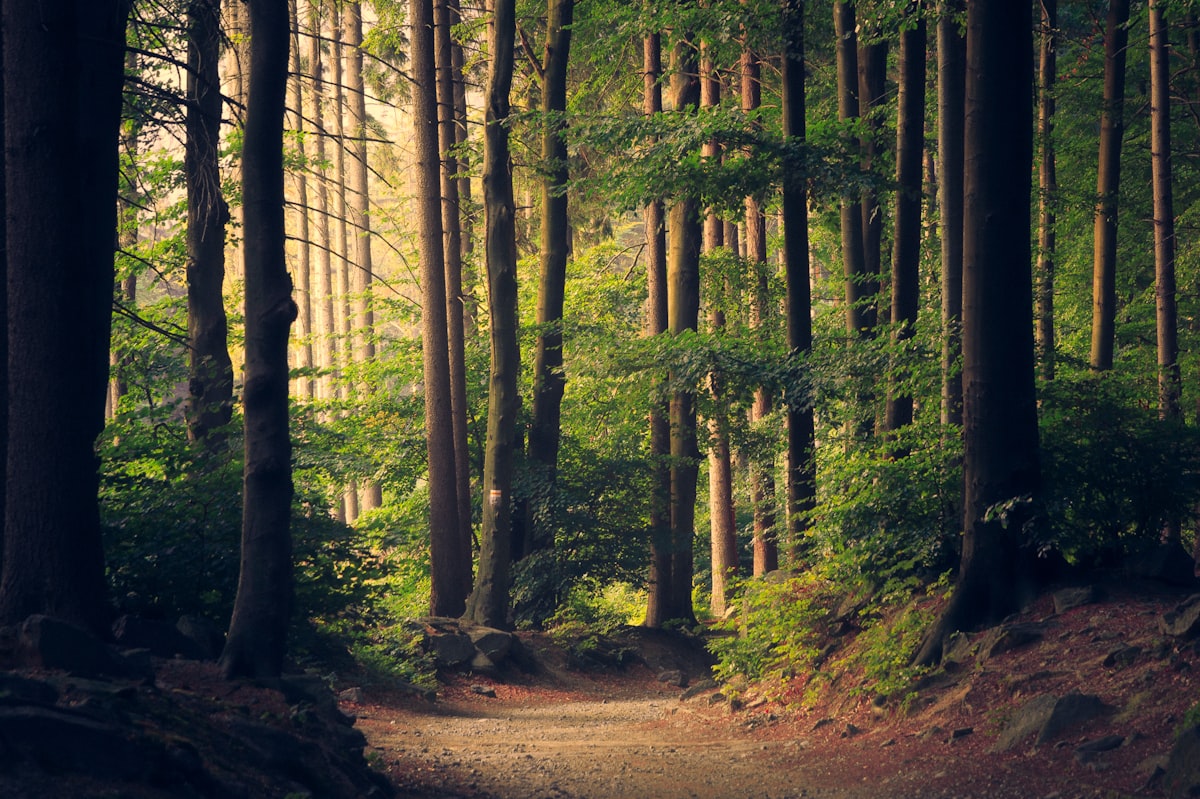
Most people from Cali know the Pance River as the quintessential Sunday plan: arrive early, throw a blanket on the bank, buy a grilled corn on the cob, and head back before the sun gets too strong. But when the last cars leave and the dust they kick up settles, the corregimiento of Pance transforms into something else. The temperature drops a few degrees, the noise from the speakers disappears, and the tropical dry forest begins to breathe again.
The Pance Ecological Reserve, which covers more than 1,200 hectares between the Cerro de la Horqueta and the river basin, has been a passage territory since pre-Columbian times. The indigenous people of the region, mainly from the Pijaos ethnic group, used these trails to connect the Valle del Cauca with the Pacific slope. Much later, in the 1970s, families from Cali began building vacation homes in the upper area, and by the 1990s there was already a conservation movement led by the community that managed to stop uncontrolled urbanization. Today, Pance is one of the few protected green areas less than 30 minutes from downtown Cali, and its true character is only revealed after six in the evening.
📌 Transparency
This article contains sponsored/affiliate links. We may receive a small commission at no extra cost to you.
Timeline or historical milestones
From indigenous trail to tourist corregimiento
The development of Pance as a destination was not planned. During the 1950s, the road leading to the corregimiento was a bridle path. There were only two or three houses of farmers who grew coffee and plantains on the slopes. It was in 1965 when a group of businessmen from Cali built the first private resort, which attracted families looking to escape the city's heat.
- 1978: The Pance Community Action Board is founded, which begins organizing garbage collection and road maintenance.
- 1985: The Universidad del Valle conducts the first census of nocturnal fauna in the basin, documenting species such as the howler monkey and the tiger cat.
- 1992: A forest fire caused by a poorly extinguished campfire burns 40 hectares. This awakens environmental awareness in the community.
- 2001: The Pance Ecological Reserve is declared a municipal protection area, prohibiting new constructions in the upper zone.
- 2015: A group of local guides begins offering informal night walks, focused on spotting glass frogs in the streams.
- 2023: The Mayor's Office of Cali installs bilingual signage on the main trails, seeking to attract low-impact foreign tourism.
Today, in May 2026, the night walks are organized by collectives such as Pance Nativo and Astrónomos del Valle, who work with the community to make night ecotourism a sustainable source of income for the families of the corregimiento.
Key characters or events
Don Efraín, the guide who knows all the sounds
Don Efraín Cifuentes is 67 years old and has lived in Pance since he was born. His father was one of the first farmers to grow coffee in the area. Today, he is the most sought-after guide for night walks. Don Efraín doesn't use a headlamp. He walks barefoot when the terrain allows it and distinguishes the call of a poisonous frog from that of a glass frog just by the frequency of the croak. He says he learned to move at night as a child because he had to go look for the cows that got lost in the bush. "You don't need light if you know how to listen," he says.
The Weeping Woman of the Pance River
All the guides in the area have a version of the legend. The most repeated one is about a woman who lost her child in a river flood in the 1940s. They say that when the water level rises after a storm in the mountains, her lament can be heard mixed with the sound of the water. The local guides mention her with respect, not fear. Some hikers swear they have seen a white figure near the entrance bridge, but always in the distance, never close up.
The goblin of the dry forest
Another recurring story is about the goblin that protects the guáimaro trees. According to oral tradition, it is a small being that appears when someone cuts down a tree without asking permission. The old farmers leave an offering of panela and coffee before felling, as a sign of respect. During the night walks, the guides sometimes tell this story in a low voice while the group passes under the oldest guáimaro trees, which are over 200 years old.
The sighting of the glass frog in 2019
In 2019, a group of biologists from the Universidad del Valle confirmed the presence of Nymphargus grandisonae, a species of glass frog that had not been recorded in the Valle del Cauca since 1987. The discovery was made during a night walk in the El Indio stream, a tributary of the Pance River. This put the corregimiento on the national herpetology map and attracted researchers from the Universidad de los Andes. Since then, local guides have learned to identify the frogs by their size and transparency, and show them to visitors without touching them, using flashlights with a red filter so as not to stress them.
Current status
The astronomical walk: the sky of Pance without light pollution
The main attraction of Pance at night is the almost total absence of artificial light. Unlike downtown Cali, where the orange glow of the streetlights blocks out the stars, in the reserve you can see the Milky Way with the naked eye on clear nights. The recommended observation points are:
- The Cerro de la Horqueta viewpoint: At 1,800 meters above sea level. It is reached after a 45-minute walk from the reserve parking lot. Ideal for seeing southern hemisphere constellations like the Southern Cross and Scorpius.
- The clearing at Finca El Edén: An open area at 1,200 meters, surrounded by guadua bamboo. Perfect for astrophotography sessions with a tripod.
- The clearing on the Sendero de los Micos: A space that opens up after a 20-minute walk, where the forest canopy parts and reveals the zenith sky.
Amateur astronomers from the Universidad del Valle recommend scheduling visits on new moon nights, when the moonlight does not compete with the stars. In May 2026, the best dates are from the 7th to the 12th and from the 22nd to the 27th. Bringing 10x50 binoculars or a portable Celestron telescope is optional, but it enhances the experience.
Nocturnal fauna: how to spot it without disturbing it
The reserve hosts a surprising diversity for being half an hour from a city of 2.5 million inhabitants. The most common nocturnal animals are:
- Glass frogs (Centrolenidae): They measure between 2 and 3 centimeters. Their skin is transparent, and you can see their internal organs. They perch on the underside of leaves over streams. To see them, you must approach slowly and use a flashlight with a red filter (frogs do not detect that wavelength).
- Mottled owl (Strix virgata): It is heard more than it is seen. Its call is a low whistle that rises in pitch. It nests in the aguacatillo trees near the river.
- Common opossum (Didelphis marsupialis): The largest marsupial in the dry forest. It comes out to look for fallen fruit after 8 pm. It is easily seen on the trails near the pedestrian bridge.
- Great fruit-eating bat (Artibeus lituratus): A key pollinator of the forest. It feeds on figs and guavas. It flies low, sometimes brushing the heads of hikers.
The golden rule that guides repeat: do not use white light. White light disorients animals and can temporarily blind them. Flashlights with a red filter or headlamps with a red mode are mandatory. Frogs should also not be touched: their skin is porous and the oil from human hands damages them.
Living legends: the stories the guides tell
Beyond biology, Pance at night is a stage for oral tradition. Local guides have systematized the legends as part of the tour. The most popular is that of The Weeping Woman of the Pance River, which we already mentioned, but there are others:
- The black dog of the stream: A large dog with no owner that appears on the trails after 10 pm. The farmers say it is the spirit of a dog that died defending its owner from a flood. If you come across it, you must not run, just keep walking.
- The light of the guáimaro: Some people claim to have seen a bluish light floating among the guáimaro trees. The guides explain it is bioluminescence from fungi, but the magical version says it is the soul of an indigenous person who watches over the forest.
These stories are not told to scare, but to connect visitors with the memory of the place. Don Efraín says that "the bush has a memory, and if you don't respect it, the bush closes up."
Logistics for the night walk
Going to Pance at night is not the same as going during the day. There are rules that are not negotiable:
- Entry time: The reserve closes its gates at 6:00 pm for vehicles. Organized night walks have special permission to enter until 7:30 pm, but this must be coordinated with the guides. You cannot enter after that time without authorization.
- Safety: It is not recommended to go alone or as a couple. The minimum group size is 4 people. The trails have no cell signal in several sections, so it is best to download the area map on Google Maps before arriving.
- Clothing and equipment: Bring long pants (for mosquitoes and vegetation), long-sleeved shirt, boots or sneakers with good grip (the ground is rocky and can be slippery), waterproof jacket (fog appears suddenly), headlamp with red filter, water (1.5 liters per person), snack (dried fruit or granola), and a bag for trash.
- Reference price: Guided walks cost between $30,000 and $50,000 COP per person, depending on the group and duration (2 to 4 hours). Prices are a reference for May 2026 and may vary.
The curious fact: the community telescope
At Finca El Edén, owned by the Orozco family, there is an 8-inch reflector telescope that several families from the corregimiento bought together in 2022. They use it for public observation sessions once a month, when the moon is in its waning crescent phase. The telescope has an automatic tracker that allows you to see Jupiter and its moons clearly. The owners do not charge an entry fee, but ask for a voluntary contribution for maintenance. It is one of the few community telescopes in the Valle del Cauca.
Call to Action
If after reading this you still want to see the Milky Way from the Cerro de la Horqueta or hear the call of the mottled owl, don't keep your desire to yourself. Malokal is organizing the next guided walk on Saturday, May 16, 2026, in partnership with the amateur astronomer group from the Universidad del Valle. The departure is at 5:30 pm from the Pance Ecological Reserve parking lot. It includes a local guide, use of the community telescope, and a borrowed red flashlight. The cost is $40,000 COP per person. Spots are limited to 15 people to avoid disturbing the fauna. To reserve your spot, write to Malokal's WhatsApp or find the event at malokal.com. Don't let Pance at night be just a story someone told you.